Methodology

How we test kids bike kickstands

We do three things before a kickstand goes on this site: we read what buyers of that exact part actually wrote, we measure the dimensions the listing claims, and we fit each length to a real bike to confirm the wheel size it suits. Anything that does not survive those three steps gets written down as a limit.

Kickaroo sells one part, so the method is narrow and repeatable. It is not a laboratory protocol and we do not pretend otherwise. It is the set of checks a bike mechanic runs before putting a component on a child's bike.

5

Lengths measured and matched to a wheel size before publication

— Kickaroo product specifications, 2026

456

Buyer ratings read on this kickstand before it went on sale

— Kickaroo buyer ratings, 2026

0.41 in

Measured mounting hole, identical on all five lengths

— Kickaroo product specifications, 2026

Step one: read what buyers wrote

Before anything is measured, we read the written feedback from people who bought this exact kickstand. Written comments say things a specification sheet never will: which wheel size a length really suited, what was missing from the bag, and which part loosened after a few weeks of use.

A rating on its own tells you almost nothing. A sentence tells you a great deal. When a buyer writes that the 12-inch length was too long for their frame and that they shortened the tube with a saw, that is a usable fact about how this part behaves on a real bike. When another buyer writes that they deliberately ordered the 18-inch length for a 20-inch bike after reading about the fit, that is a second usable fact pointing the same way.

We look for repetition rather than for drama. One person mentioning something can be one unlucky unit. Three people mentioning the same thing independently is a property of the product. That is the threshold we use, and it is how the missing bolt, the weak return spring and the loose rubber sleeve ended up written into the product page and the reviews page instead of staying quiet.

Step two: measure what the listing claims

Every dimension published on this site was measured on the part, not copied from a supplier description. Leg length, weight, plate size, plate thickness, mounting hole diameter and the bolt size the hole accepts are all checked before the number appears anywhere.

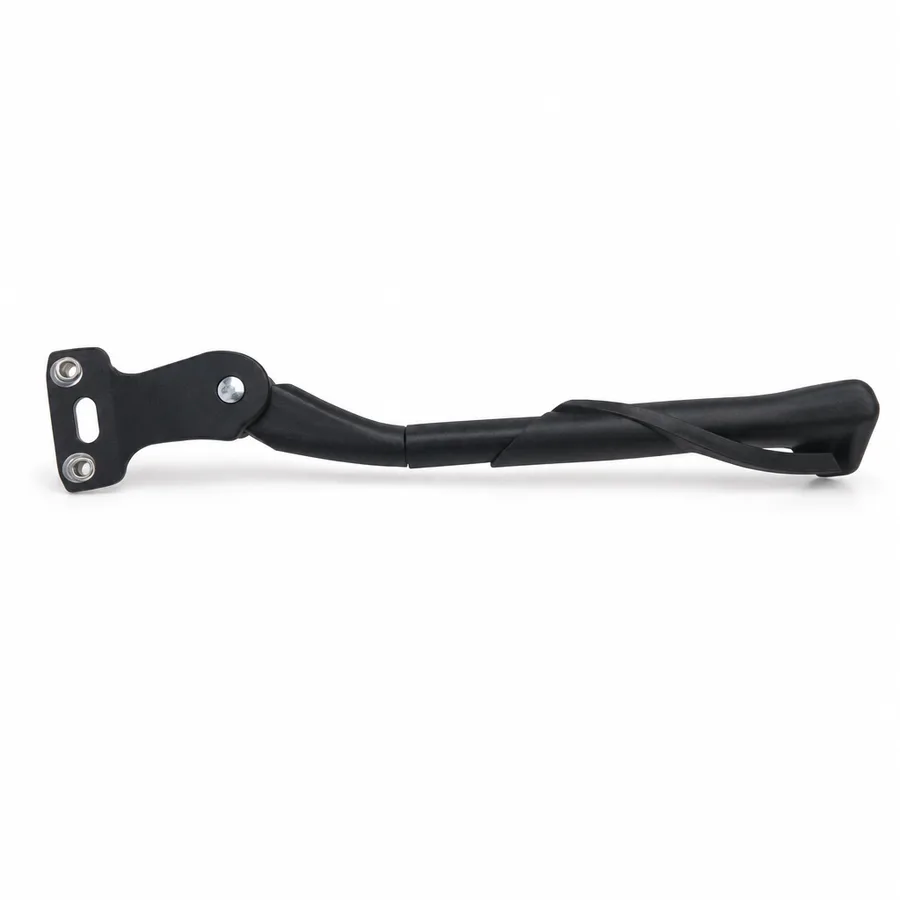
The published figures are these. The mounting plate measures 0.98 x 1.65 in (2.5 x 4.2 cm) and is 3 mm thick. The mounting hole is 0.41 in (10.5 mm) and takes a standard kickstand bolt of 0.31 to 0.39 in (8.0 to 10.0 mm). The five leg lengths are 7.3 in (18.5 cm), 8.1 in (20.5 cm), 8.9 in (22.5 cm), 10.0 in (25.5 cm) and 11.0 in (28 cm), weighing 4.9 oz (139 g), 5.1 oz (144 g), 5.2 oz (146 g), 5.5 oz (155 g) and 5.6 oz (159 g) in that order. The shipped package weighs 0.37 lb (0.170 kg).

If a number is not on that list, it is not on this site. There is no load rating on these pages, because we have not run a load test and a figure invented for a product page is worth nothing to you. The body is painted steel and the foot is rubber, which is what the part is made of, and we do not describe it with any other material name.

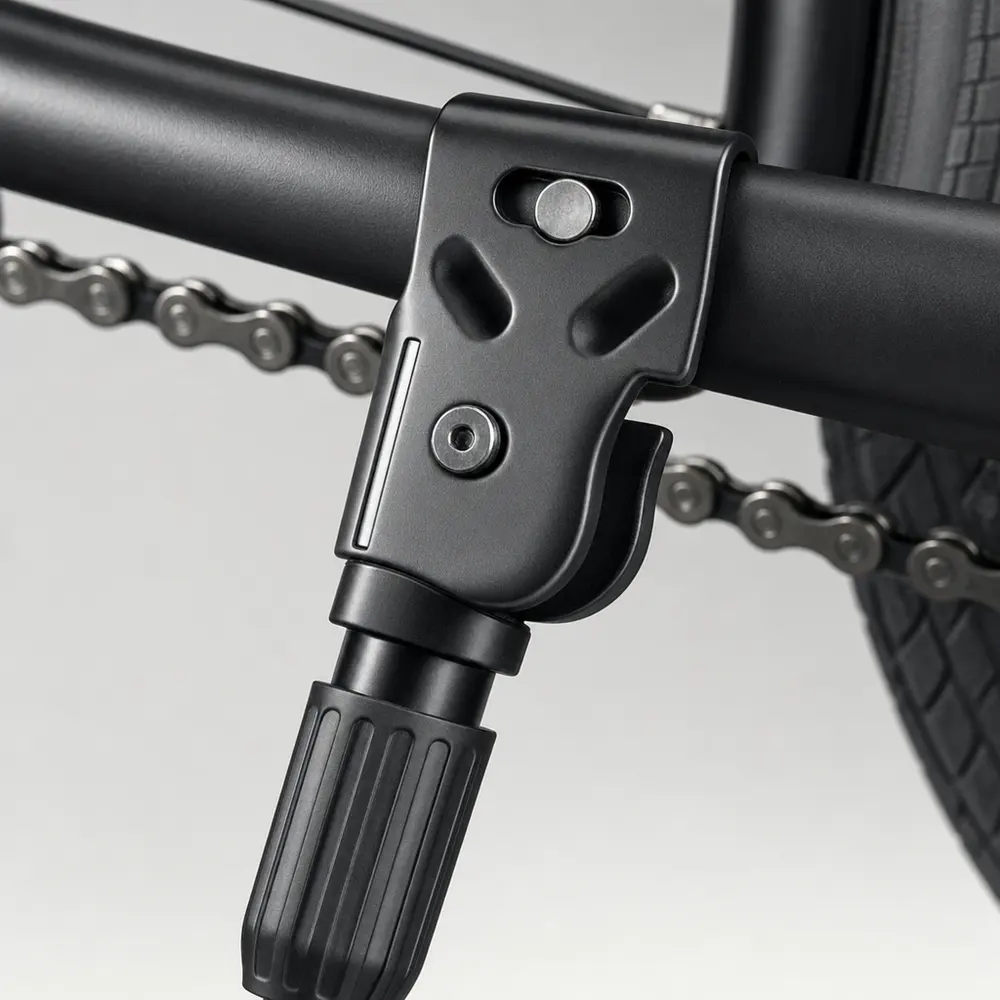
Close-up of the kickstand mounting plate and pivot, showing the mounting hole and the adjustable collar

Step three: match the length to a wheel size

Each of the five lengths is fitted to a bike with the wheel size it is sold for, and the bike is checked standing on level ground and on a slight slope. A kickstand that parks the bike at a sensible lean passes. One that lifts the wheel or lets the frame stand too upright does not.

This is the check that matters most, because sizing is where buyers of this kind of part go wrong. A kickstand two inches too long does not simply look odd. It raises the rear wheel slightly, the bike stands nearly vertical, and the first breeze or nudge puts it on the ground. A kickstand slightly too short leans the bike further over and still parks it safely, which is why we tell people who fall between two sizes to take the shorter one.

We fit each length to a bike belonging to a family we know, park it, come back to it, and look at what happened. Bikes get parked on gravel, on grass and on a garage floor, because a rubber foot behaves differently on each. The result of all that is the table on the size guide, and it is the reason the 16-inch page and the 20-inch page exist as separate pages rather than as one paragraph.

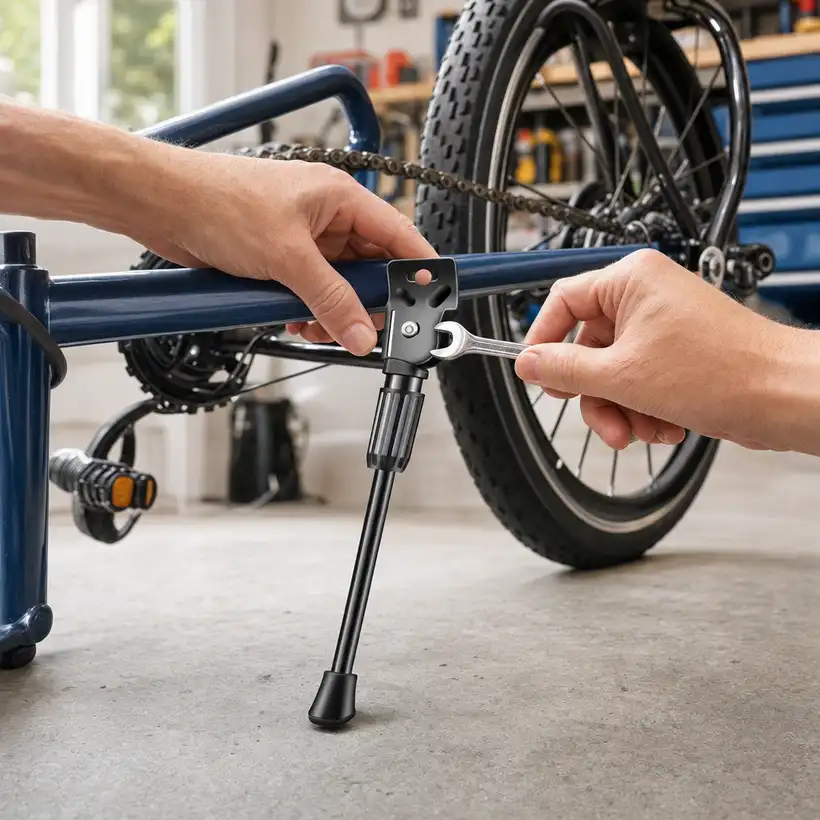
Hands bolting the Kickaroo kickstand plate to the rear frame of a kids bike with a wrench

Limits we accept and publish

Four things about this kickstand are less than ideal, and all four come from what buyers told us. It ships without a bolt. The return spring is weak on some units. The rubber sleeve on the foot can work loose. And the sizing genuinely requires you to measure the wheel first.

It arrives without a bolt. The kickstand comes on its own in the bag. Several buyers pointed this out, one of them on the day the parcel arrived. The mounting hole is 0.41 in (10.5 mm) and a standard bike kickstand bolt passes through it. In most cases the bolt is already on the bike, sitting in the rear chainstay bracket, often holding a plastic blanking cover. Check before you start, and if you need one, any bike shop has it for a couple of dollars. The installation guide shows where it goes.

The return spring does not always fold the leg on its own. One buyer described it precisely: the spring is not strong enough to fold the leg all the way back once you lift the bike, so you help it with your foot. Spring tension varies from unit to unit. The kickstand holds position at both ends and parks the bike either way, but if you expect a leg that snaps home by itself every time, some units will not do that.

The rubber sleeve on the foot can come off. A buyer whose child parks a balance bike at the bike park reported that the sleeve on the leg worked loose, and added that good glue fixed it. A drop of contact adhesive puts it back permanently. It is a five-minute repair rather than a defect that ends the part's life, but it happens often enough to be worth stating.

Sizing is on you, and it needs a tape measure. This is the limit that costs people the most time. The lengths are fixed, they cannot be extended, and only one buyer in the whole set found the tube easy to shorten with a saw. Measure the diameter of the wheel your child rides today, then order the length sold for that wheel. If the bike is between sizes, order the shorter length.

What we will not claim

We do not publish a weight limit for this kickstand, because we have not measured one. We do not describe the body as anything other than painted steel, because that is what it is. We do not claim a certification for a part that carries none. And we do not present the price as anything other than what it is: an inexpensive part that does one job well when the length matches the bike.

Where we are unsure, we say so on the page rather than filling the gap with a confident sentence. That approach costs us a few sales from people who wanted a bigger promise, and it saves a lot of disappointed emails from people who would have received something different from what they read about. Orders are covered for 30 days either way, which is set out on the refund policy.

Who runs these checks

Dana Whitfield · Kids bike mechanic, Kickaroo

Dana built and repaired children's bikes in a workshop before starting Kickaroo, and fits every one of the five kickstand lengths to bikes owned by families around her before writing about them.

Dana runs every check on this page and writes the result. Background on why Kickaroo sells one part rather than a catalog is on the about page, the buyer feedback that feeds step one is published in full on the reviews page, and questions about a specific frame reach her through the contact page. The rest of the writing is collected in the guides, including the comparison between adjustable and fixed designs and the mountain bike kickstand guide.