
Mountain Bike Kickstands: What Actually Works
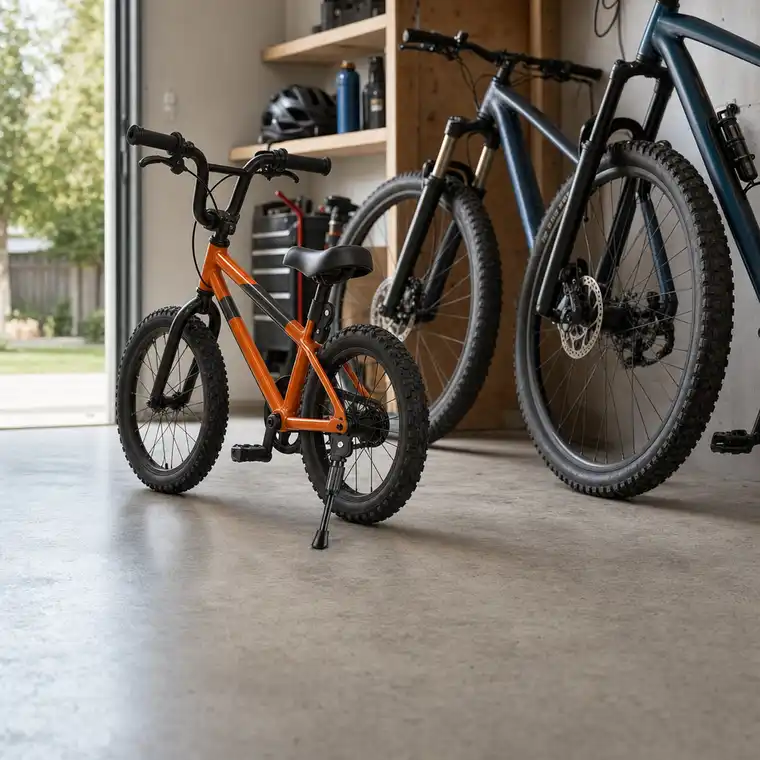
Ask a group of mountain bikers about kickstands and you will get an answer that sounds like disdain but is actually experience. A trail bike spends its working life being thrown around, landed on and dragged over rocks, and anything hanging off the rear triangle eventually finds something to catch on. That is not snobbery. It is what happens when a folding metal leg meets a rock garden at speed.
The awkward part is that the same bike also has to be parked. It gets leaned against a truck tailgate, propped on a fence at the trailhead, laid in the dirt at a rest stop and stood up in a garage next to a car door. Nobody has solved that problem elegantly, and the state of the market is that the solutions available are a set of compromises rather than a single right answer. This guide lays out what those compromises are, which frames can take a stand at all, and how the answer differs between an adult trail bike and a child's 20 inch mountain bike.
What this guide covers, and what it does not
Being clear about this up front saves everyone time. If you ride a 27.5 or 29 inch trail bike, the adult stand is made for wheels that size and the sections below on where a stand can mount are the ones that decide whether it will fit your particular frame. A metal hardtail with a bracket on the chainstay is a straightforward yes. A carbon frame, or a full suspension bike with nothing to bolt to on the swingarm, is a no, and no amount of wanting it to work changes that.
If you are here because your child rides a 20 inch bike with knobby tires and a mountain bike frame shape, the last section of this page is the one that applies, and the fixed 11.0 in kids length is what fits. That is a genuinely different machine from an adult trail bike despite sharing a look, and a 20 inch wheel is the one size where both ranges overlap.
Why mountain bikes ship without kickstands
The catching problem is the one riders talk about first, and it is real without being universal. A stand folded flat along the chainstay sits low and close to the ground. On smooth singletrack it never touches anything. On a rocky descent it is one more thing at pedal height, and if it is knocked partly open, it becomes a hazard to the rider's own crank.
The second reason is quieter and more decisive. Frame design moved toward shaped, ovalized and asymmetric tubing to control stiffness, and it moved toward suspension layouts that put pivots and linkages exactly where a stand would want to sit. A clamp needs a flat or round section of predictable diameter. Modern rear triangles frequently do not have one.
The third reason is cultural but it has a technical basis. Mountain bikes are ridden uphill, and weight on a bike being pedaled uphill is felt in a way that weight on a parked bike is not. The result is that even riders who would find a stand convenient in a parking lot rarely fit one.
The places a kickstand can mount
The chainstay side mount is the design used on children's bikes and on many older adult hardtails. A steel plate sits against the left chainstay, a bolt passes through it, and the leg hangs from a pivot on the plate. It is simple and light, and it depends entirely on having a flat or round section of stay to sit against.
The dropout or axle mount attaches near the rear wheel, usually reusing a rack eyelet or clamping around the axle itself. It puts the leg further back, which gives good support at the rear of the bike, and it is common on touring and commuting bikes. On a mountain bike with a thru-axle and no eyelets, there is often nothing there to attach to.
The center mount sits under the bottom bracket, between the chainstays. It is the strongest position of the three and it is what cargo bikes and heavy delivery bikes use. Some frames come with a dedicated plate there from the factory, and where a frame does not, a center-mount stand that clamps between the stays is the fallback when the chainstay itself has no bracket to bolt to. Our adult stand offers this as one of its three patterns for exactly that reason. What rules it out is a cable guide, a brake line or a suspension pivot already sitting in that space.
The chainstay side mount is also the pattern our adult stand uses in its two-hole and three-hole versions, and the pattern the kids stand uses in all five lengths. Which of the three you need is a question you answer by looking at the bike, not by reading a product page.
Why many modern frames have no mounting point
Look at the left chainstay of a modern hardtail and you will often find it flattened vertically near the bottom bracket for tire clearance, then swelling into a shaped section, then narrowing again toward the dropout. A plate needs an inch of consistent surface to sit on without rocking, and a plate that rocks will either loosen or dent the tube.
Disc brakes complicate it further. On many frames the rear caliper mounts to the chainstay rather than the seat stay, and it sits precisely where a kickstand plate would want to go. Moving the stand forward puts the folded leg into the crank arc. Moving it back puts it into the caliper. Sometimes there simply is no position that satisfies both.
The pragmatic test takes ten seconds. Rest a credit card flat against the left chainstay behind the crank. If the card sits flat with no rocking and nothing else is in that space, a bolt-on plate has somewhere to live. If it rocks, or if a caliper or a cable guide is in the way, that frame is telling you no.
Carbon frames and clamp-on stands
This is the one place in this guide where the answer is a flat no rather than a trade-off. A metal tube that is over-clamped dents and keeps working. A carbon tube that is over-clamped can delaminate, and the damage is often invisible from the outside until the section fails under load. Any part that clamps around carbon should be one the frame manufacturer explicitly approves.
If your carbon frame has threaded rack eyelets at the dropouts, an axle-area stand that bolts to those eyelets is a different proposition, because the eyelets are designed load points. Check the frame documentation for a maximum rack load before assuming that is fine, and treat anything that involves squeezing a carbon tube as out of the question.
Full suspension is a separate problem
Picture the bike parked with a rider's weight off it. The shock is extended, the rear end is at full height and the stand holds the bike at the angle you set. Now imagine a bag on the saddle or someone leaning on the bars. The suspension compresses, the rear triangle rotates, the effective length of the stand relative to the ground changes, and the bike can settle past its balance point.
There is also a clearance question through the travel. A stand bolted to a swingarm swings with it, and the arc it follows has to be clear of the seat tube, the shock body and the linkage hardware. Some frames have room. Many do not, and finding out by compressing the suspension against a metal leg is an expensive way to learn.
The workable answers for a full suspension bike are the ones that do not attach to the bike at all: a stand that stays in the garage, a rack in the truck bed, or the habit of leaning the bike on its saddle and bar. None of them travel with the bike, which is the limitation.
The realistic options, compared
| Option | Works on | Avoid on |
|---|---|---|
| Chainstay side mount (bolt-on plate) | Hardtails with a flat, round alloy chainstay and clearance behind the crank | Carbon stays, shaped stays, frames with a chainstay-mounted brake caliper |
| Rear axle / dropout mount | Frames with a threaded rack eyelet or a quick-release axle that accepts a plate | Thru-axle frames with no eyelet, and anything with a rear derailleur hanger in the way |
| Center mount under the bottom bracket | Touring, cargo and commuter frames built with a kickstand plate, and frames with clear space between the chainstays behind the bottom bracket | Frames where a cable guide, the rear brake line or a suspension pivot already occupies that space |
| Clamp-on seatstay stand | Older steel and alloy hardtails with straight, round stays | Carbon frames, thin-walled stays and full suspension rear triangles |
| No kickstand, plus a storage stand at home | Any frame, since nothing is fitted to the bike | Everywhere the bike goes: at a trailhead, a rack or a parking lot it still has to be laid down |
The last row is what a frame with no mounting point anywhere leaves you with: a floor stand or a wall hook covers the garage, and the bike goes back to being laid down everywhere else. The first four rows are the ones that ride along, and the bolt-hole count behind the crank, described above, is what tells you which of them your frame accepts. On a frame that takes a bolt-on plate, the adjustable adult stand covers 20 to 29 inch wheels from that same bracket.
The Kickaroo adult stand, and the frames it suits
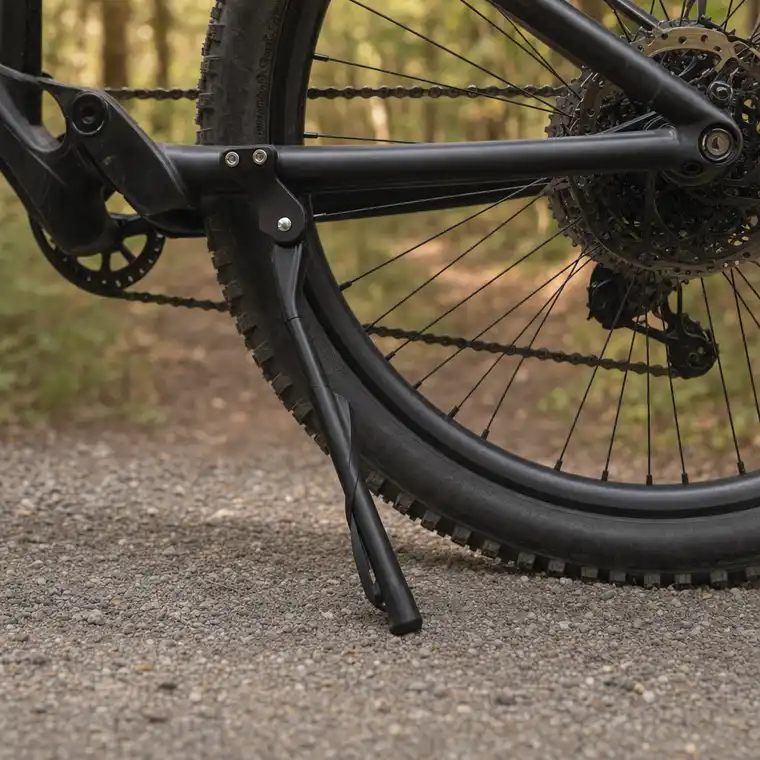
The wheel ranges are S for 20 to 22 inch wheels and M for 24 to 29 inch wheels, which puts almost every mountain bike in the M range and folding or fat-tire builds in the S range. The three mounting patterns are the two-hole plate, the three-hole plate and the center mount, and which one you need is read off the frame rather than chosen. Count the bolt holes in the bracket on the left chainstay behind the crank. Three holes is the most common arrangement on mountain bike frames. If there is no bracket there at all, the center mount bolts underneath the bottom bracket between the chainstays instead.
Two Allen keys come in the box, which is the practical difference between fitting this stand and fitting a generic one. The whole stand weighs 14.0 oz (0.397 kg). Buyers describe it the way you would hope: one wrote that he found it very sturdy when mounted on his MTB bike, another that it is heavy duty and adjustable for all sizes, and a third that it is long enough on the maximum elongated leg for a 20 inch wheel folding bike.
The frame limits are the ones set out above. Do not clamp anything to a carbon frame. On a full suspension bike, check that the bracket you are bolting to does not move with the suspension and that the folded leg clears the linkage through the travel. If the frame does not give you a bracket or a flat, uninterrupted section to work with, the garage stand in the last row of the table is still the right answer. One buyer ordered the wrong wheel range first time and had to reorder, so check the tire sidewall before you order as well as the frame.
Kids mountain bikes with 20 inch wheels
Length of the 20 inch Kickaroo kids kickstand, at 28 cm and 5.6 oz, the longest of the five fixed lengths
— Kickaroo product specification, 2026
The reason this case works is that a child's 20 inch bike inherits the look of a mountain bike without inheriting the engineering that makes a stand impossible. The chainstays are usually round or lightly shaped alloy, the brakes are often rim brakes or a caliper mounted clear of the stay, and the whole bike weighs a fraction of an adult trail bike. A bolt-on plate has somewhere to sit and very little to hold up.
Buyer feedback on that size includes one case worth repeating, because it shows both that it works and that sizing needs care. Fitting a kids mountain bike with 20 inch wheels, a buyer chose the 18 inch length instead of the 20 inch after reading that the longer one ran tall, and reported that it worked. They also had to mount the plate on the inner face of the stay because of a raised weld on the outside, which is a situation the installation guide covers in detail.
Buyer notes covering the 20 inch length, the size used on kids mountain bikes and BMX-style frames
— Kickaroo buyer feedback, 2026
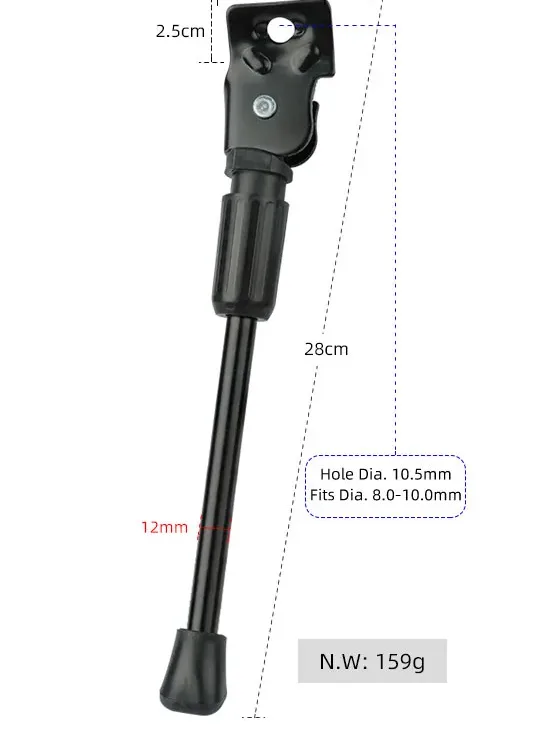
Before ordering for a 20 inch kids bike, check the same things you would on any small frame. Find a flat inch of left chainstay, confirm nothing occupies it, and confirm the folded leg will clear the tire and the crank. Full details for that length are on the 20 inch bike kickstand page, and the length chart for every wheel size is in the sizing guide.
Average across 416 verified buyer ratings on the kids range and 1,099 on the adult range
— Kickaroo verified buyer ratings, 2026
The short version
The rest of the reading on this site follows from that split. If you landed here for a child's bike, the sizing guide and the fixed versus adjustable comparison are the next two pages, and the piece on whether kids bikes need kickstands takes the opposite side of the argument seriously. If you landed here for your own bike, that same comparison explains what the adjustable leg buys you and what it costs. The 16 inch page covers the most common kids size, buyer photos are on the reviews page, and everything is listed on the blog index. The author is introduced on the about page, and unusual frames are welcome through the contact page.
A stand for 12 to 29 inch wheels
The adjustable aluminum stand covers adult bikes from 20 to 29 inches in two wheel ranges and three mounting patterns, and five fixed lengths cover kids bikes from 12 to 20 inches. Free shipping and 30 days to send it back if the frame does not take it.
Choose your range and size